
A popular term in the world of office furniture and motorsports alike is that of the ‘ergonomics’ of a particular thing. ‘Ergonomics’ is used to describe how an object may be designed for efficiency and comfort in a working environment.
And while professional race teams (the ones that win anyway) tend to master the above in every build they campaign, ergonomics are an area that is often overlooked when it comes to the weekend gentleman driver.
It’s no surprise that the driver spends 100% of the time they’re managing the vehicle at high speeds from the cockpit. Sure, that’s a super obvious statement to make, but, it seemed necessary to convey how vital it is for a driver to maintain a laser focus on what they’re doing in a high-stress situation like piloting a car around a race course. As such, the driver’s space should be arranged according to the needs of each driver (if there is a team) in a functional manner that improves efficiencies and doesn’t distract the driver(s) from keeping focused.
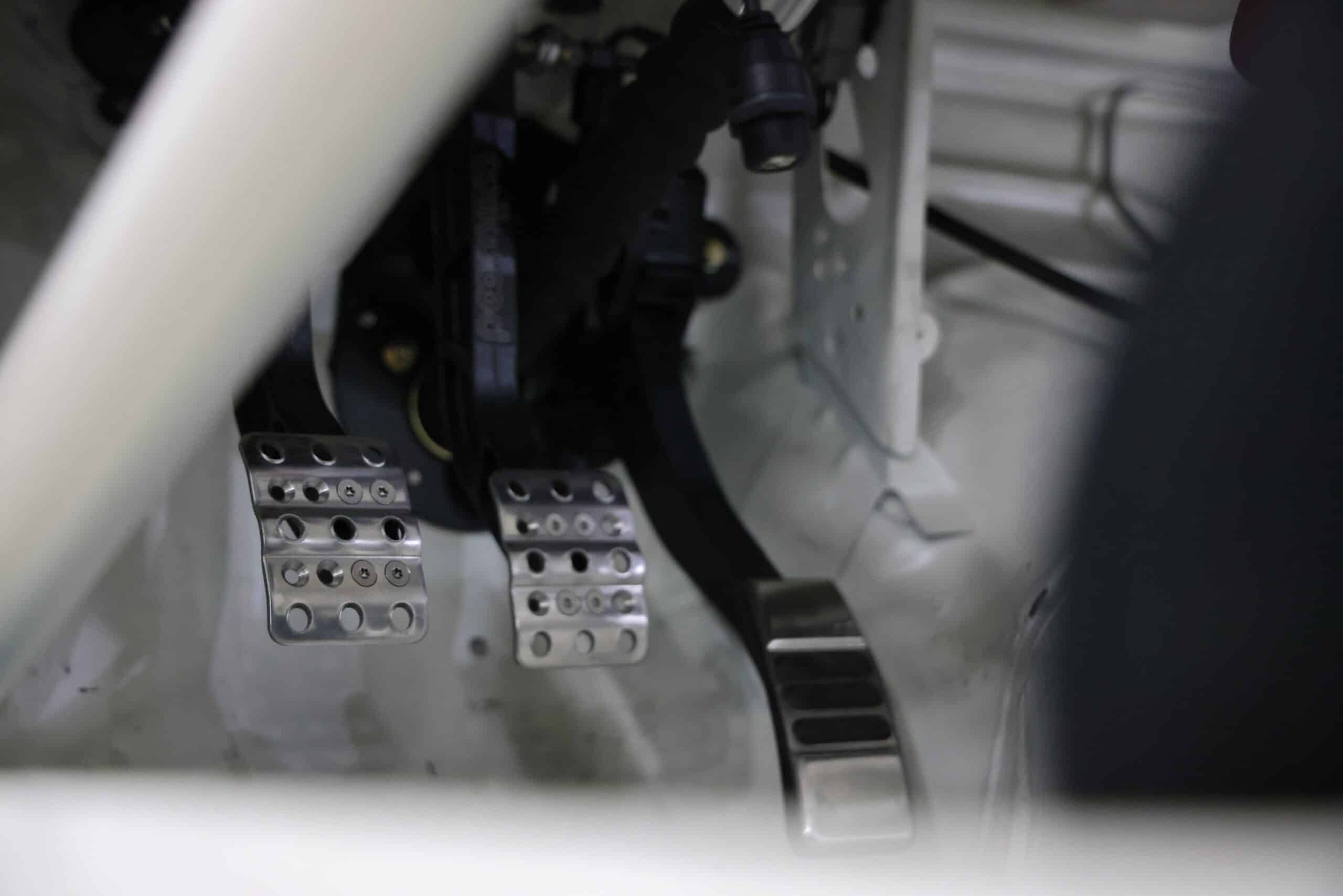
Things like seating position, shifter distance from steering wheel, ease of actuating auxiliary vehicle controls, etc., are things that we wanted to spend a bit more time on in the development phase of our Fox Body. Doing so now will help avoid any negative outcomes due to lack of planning in this phase of the build. We didn’t want to have to contend with any misplaced controls or an offset shifter stick.
So then, we invite you to step into the office of our Project Foxbody. We’re excited to share the what and the why behind how we chose to set the car up.
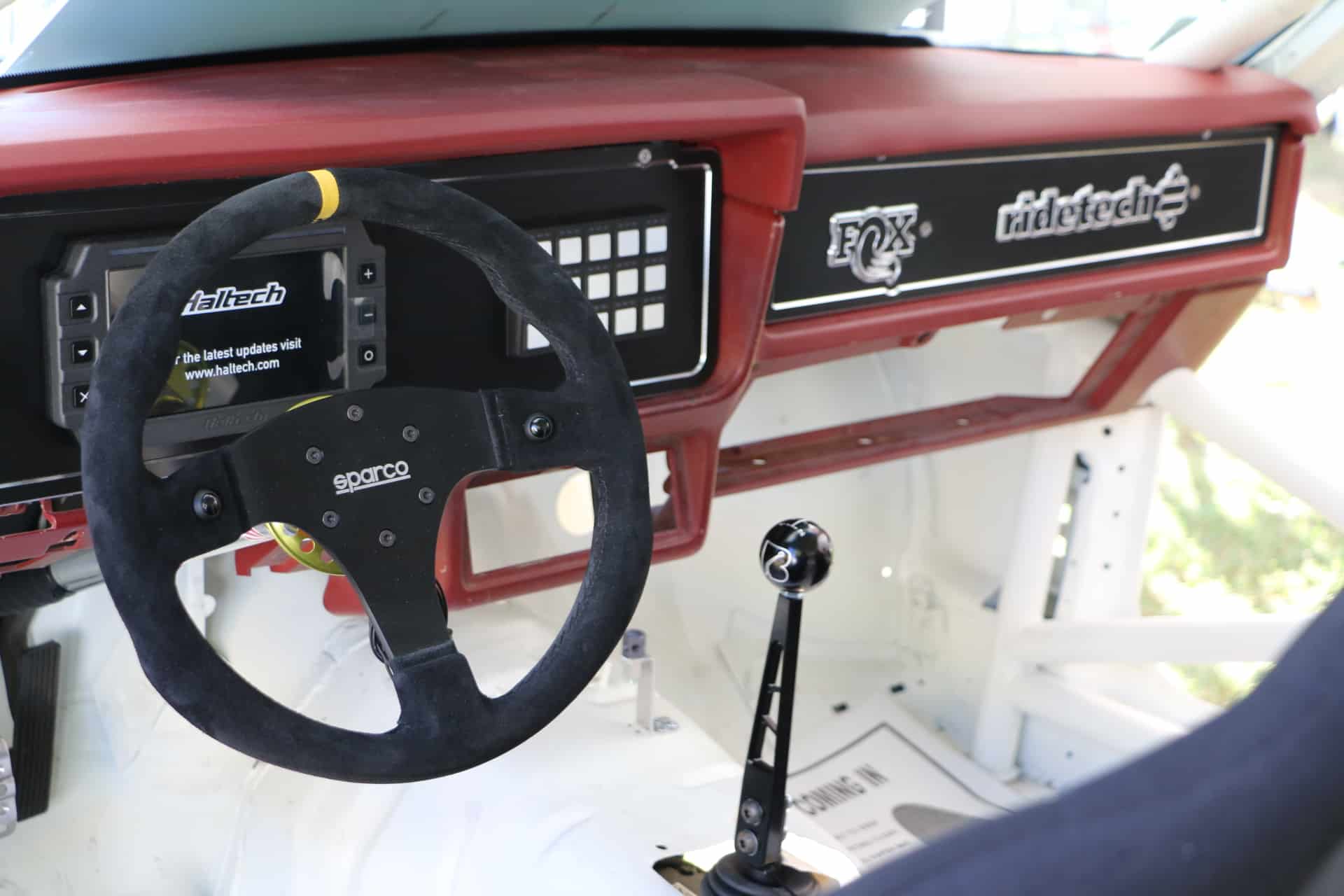
Seat(s): First off, it lets cover the seats and rail system. Typically, we would opt for a fixed rail system, but our car is going to be campaigned by two different drivers, necessitating the use of a slider rail system. A set of Sparco EVO seats and harnesses were selected for keeping the driver upright and planted through the turns. Fixed bucket seats benefit from high shoulders and sills that keep a driver from overworking their body to stay upright and their hands and feet on the controls. This is a substantial improvement over a factory style seat with minimal lateral support.
A Sparco Competition R350 steering wheel covered in suede serves as the driver’s primary connection to the car. Offering a tactile feel, it promotes good grip without requiring too much effort from the driver.
A Bowler Transmissions billet black anodized shift lever and five-speed shift knob top off the controls for the Tremec TKX shift knob providing a direct feel through the shifter gates.
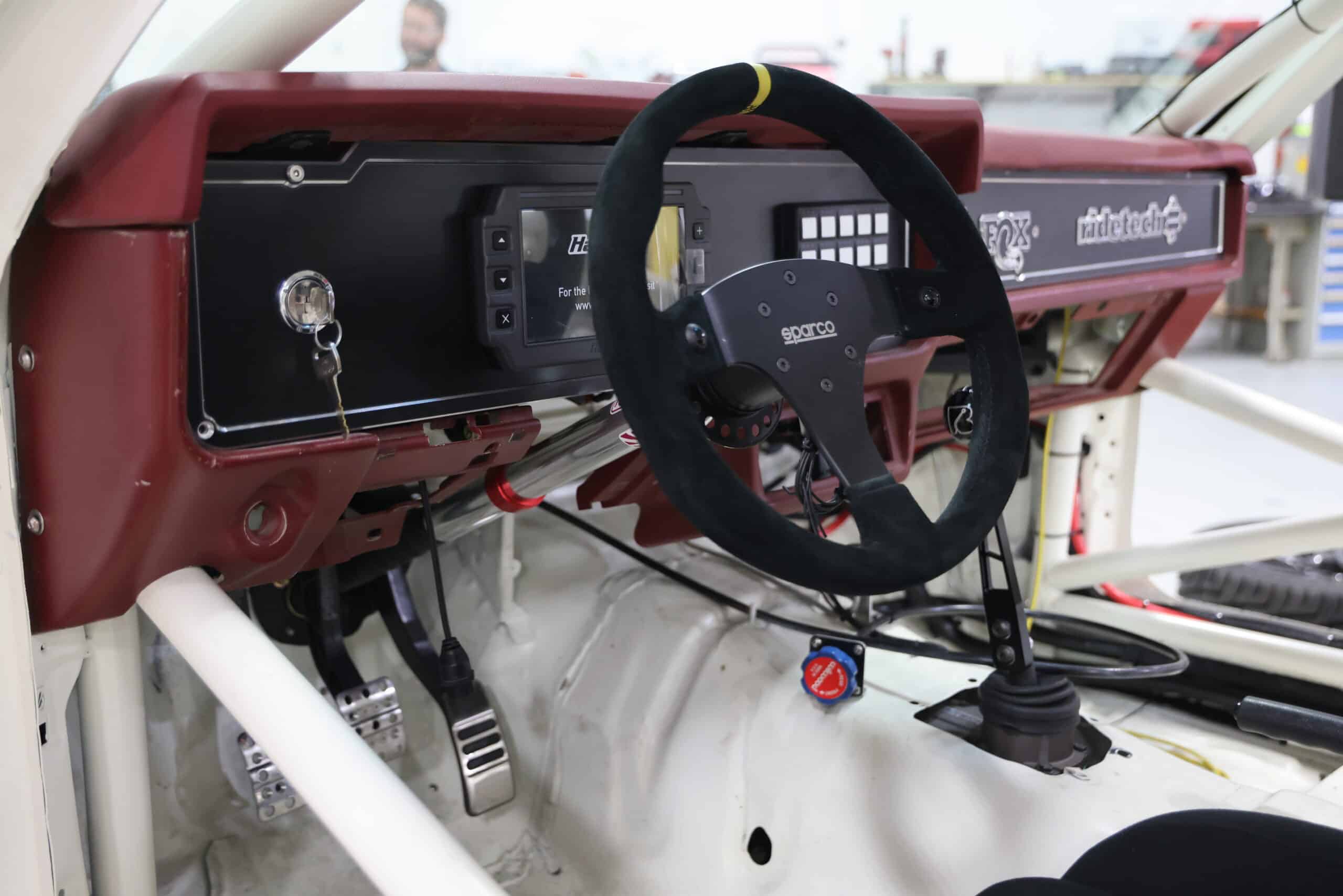
Being able to keep tabs on engine vitals like engine RPM, air/fuel mixture, engine oil pressure, coolant temp, power steering temps, etc. are vital. While it would have been fitting to employ a set of analog style gauges in a car of this vintage, that idea lost out to the ease of single CANBUS connections and having a single digital dash through which all data can be viewed.
Haltech’s iC-7 Display Dash is compatible with most of the standalone ECU’s on the market today and easily displays the information we need to keep tabs on its large 7’’ color display. Shift lights, user programmable channels, units, and alarms keep the driver updated on anything pressing in between corners. We’re also utilizing a Haltech Nexus R5 VCU (Vehicle Control Unit) which we’ll dive into via a further update.
Since we’re running a full suite of Haltech engine management, logic followed to also integrate one of their CAN Button Keypads to allow one button actuation of various vehicle systems, from fans, fuel pump, lights, ignition, etc. While utilizing the old school switches and solenoids are totally fine, having new wiring for a racecar that needs to be reliable is a worthy requirement. We’ve installed the keypad directly to the right of the iC-7 dash within reach of the driver’s right hand for an easy reach.


This about does it for this installment of the Ridetech Fox Body Mustang build. Keep your eyes peeled for the next installment!