Why Ridetech’s New Short Long Arm Front Suspension Rocks the Fox Mustang | By Wes Duenkel
Tech | Ridetech’s SLA Suspension
Vehicle manufacturers use strut suspensions because they’re simple and cheap, but high-end road and purpose-built race cars don’t. Why is that? The answer: geometry.
Suspension geometry determines changes in the contact patch and the forces the suspension exerts on the chassis when a car moves around. One of the biggest advantages a “short long arm”(SLA) suspension has over a strut is tire camber, or specifically, negative tire camber gain.
Why Camber Matters
Camber is the angle of the tire relative to the ground when viewed from the front (or back) of the vehicle. Most cars these days have the tops of the tires closer to the center of the car than the bottom. (Technically, this is negative camber…but to keep things simple, we’ll often refer to it as camber because on cars that we want to turn left and right, positive camber is bad.)
Why does negative camber matter? Intuitively, negative camber evens out tire wear because in corners, the outside of the tires do most of the work, and a little negative camber evens out the wear. But the benefits of negative camber are waaay more complex than that.
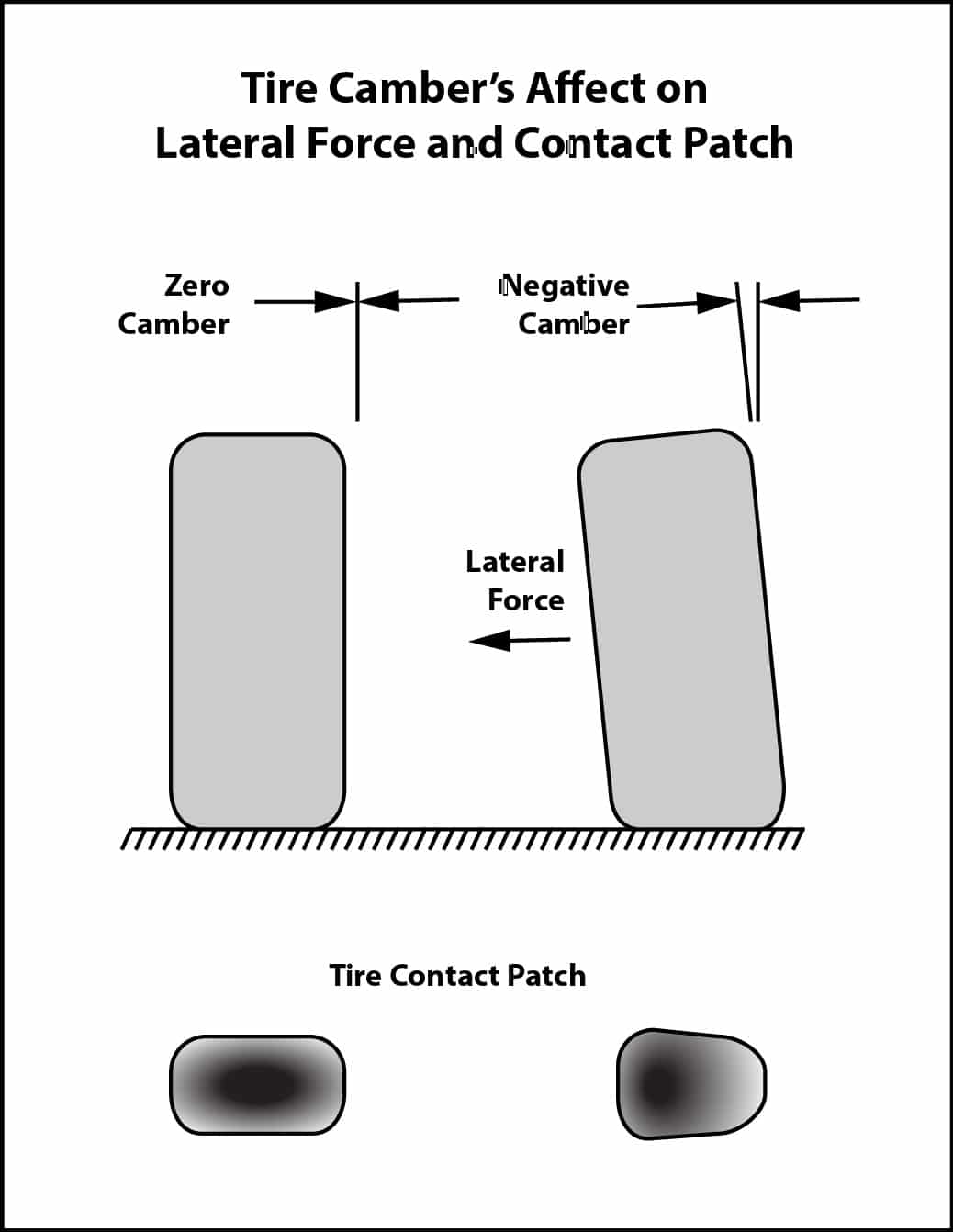
Without getting into the tire engineering weeds, just know that when a tire is rolled with camber, it also generates a lateral force. This lateral force increases grip around turns. Entire books (and engineers’ careers) are dedicated to tire physics, so at the risk of oversimplification, think of the tire’s shape changing from a cylinder to a cone. A cylinder rolls in a straight line, but a cone curves. The more negative camber, the more cone-shaped the tire becomes, and the more lateral force the tire generates.
So, negative camber is good! Let’s add more, right? Nope. While lots of negative camber is good for corners, it’s bad for longitudinal grip (traction and braking). Why? The overall area and effectiveness of the tire contact patch is compromised when a tire is cambered. A tire’s braking performance and traction under power suffers with camber.
We know what you’re thinking: What if there was a suspension that kept the tires more upright during braking and acceleration, but gained negative camber in cornering to maximizes tire (and vehicle) performance? Here’s where we expose the limitations of a strut front suspension.
Instead of an upper control arm that draws the top of the upright towards the centerline of the car in bump, a strut makes the upright follow a linear-ish path. This means a strut suspension gains less (or can even lose) camber when a car corners.
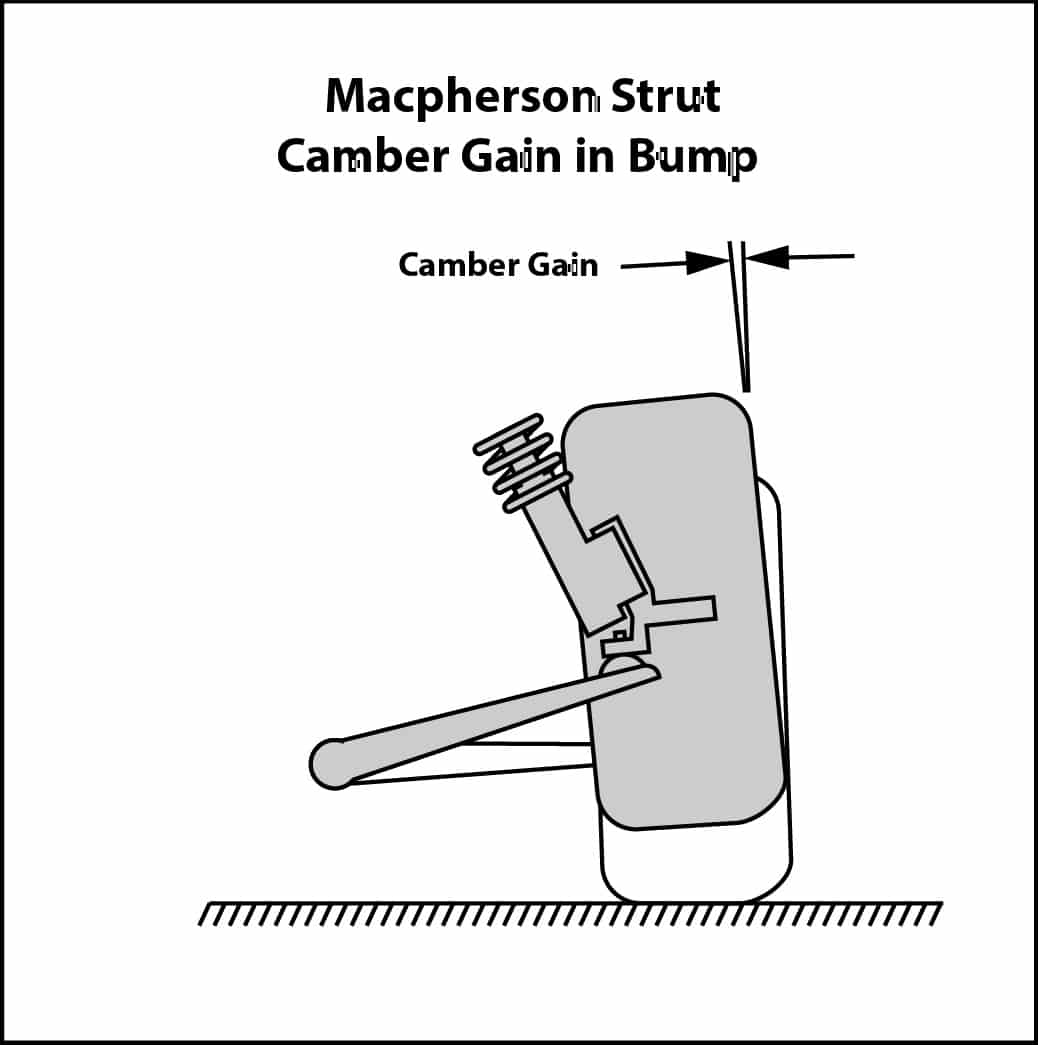
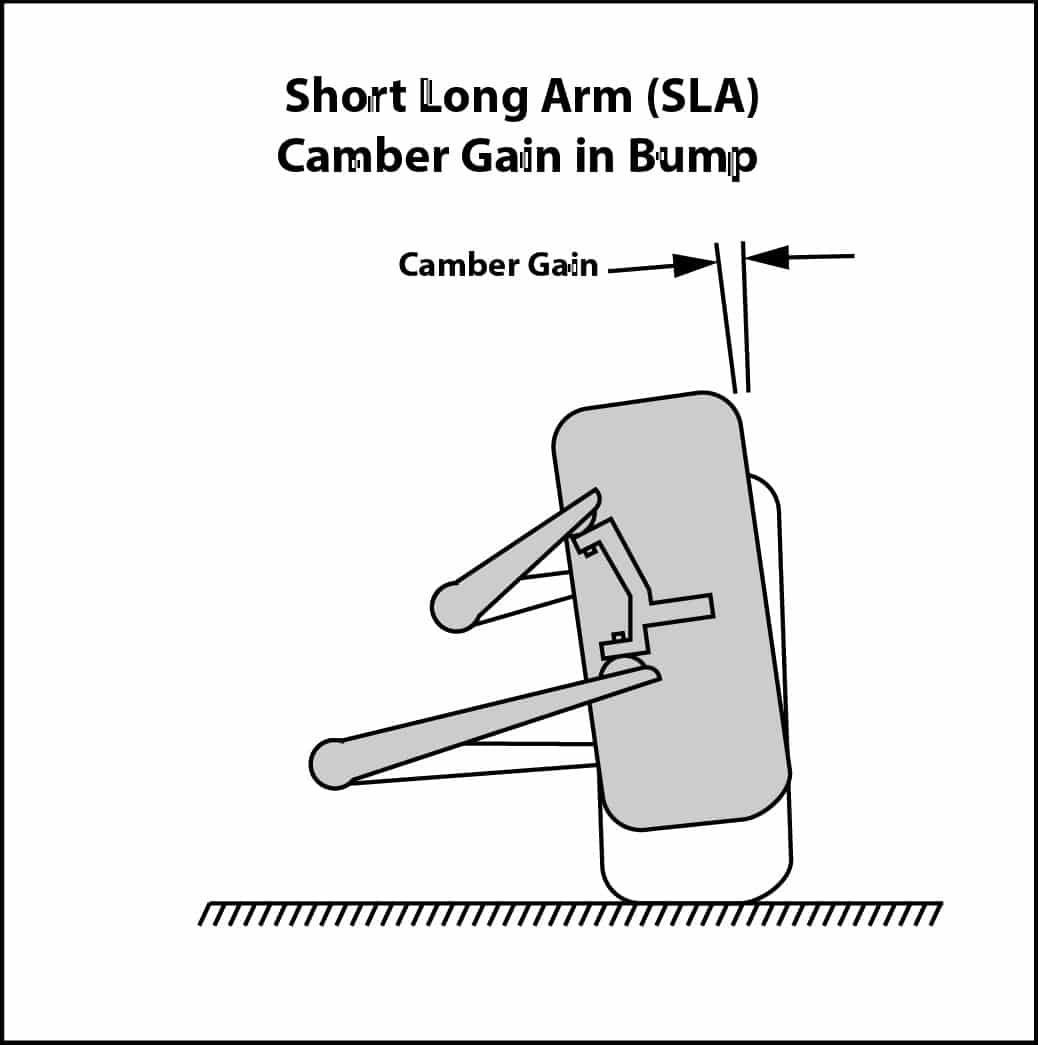
One way to get more dynamic camber is to increase the static camber (like angling the upper strut mounts inward). Great, right? Not so fast, Speed Racer. Yes, the tires will have more camber overall, but braking and traction suffer.
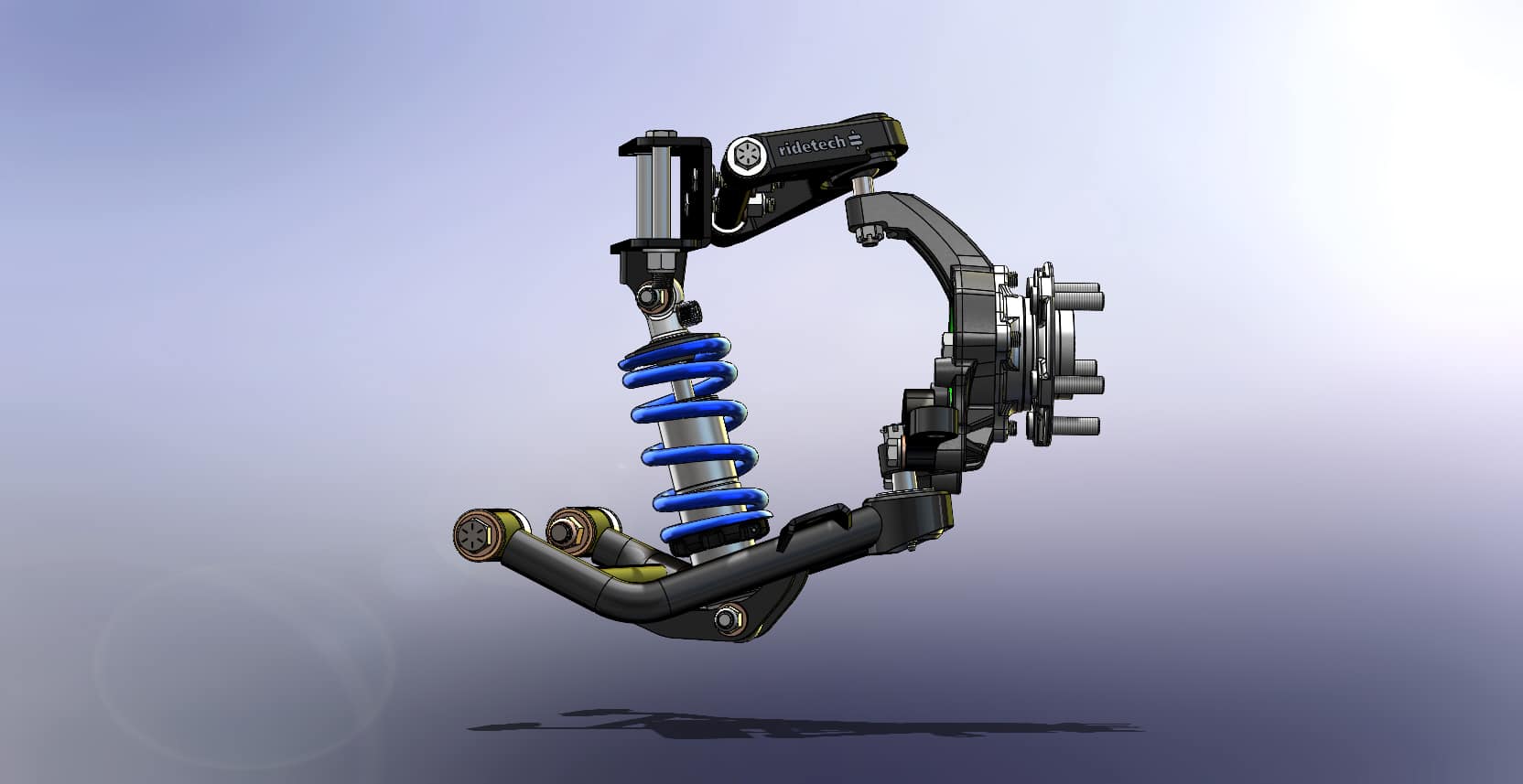
Therefore, tuning a strut suspension requires more performance compromises than an SLA suspension. While there are other compromises with a strut front suspension, camber gain is the biggest factor and why Ridetech developed an SLA suspension to replace the 1979-1993 Mustang’s strut front end for those looking to extract maximum performance from their Fox Mustang.
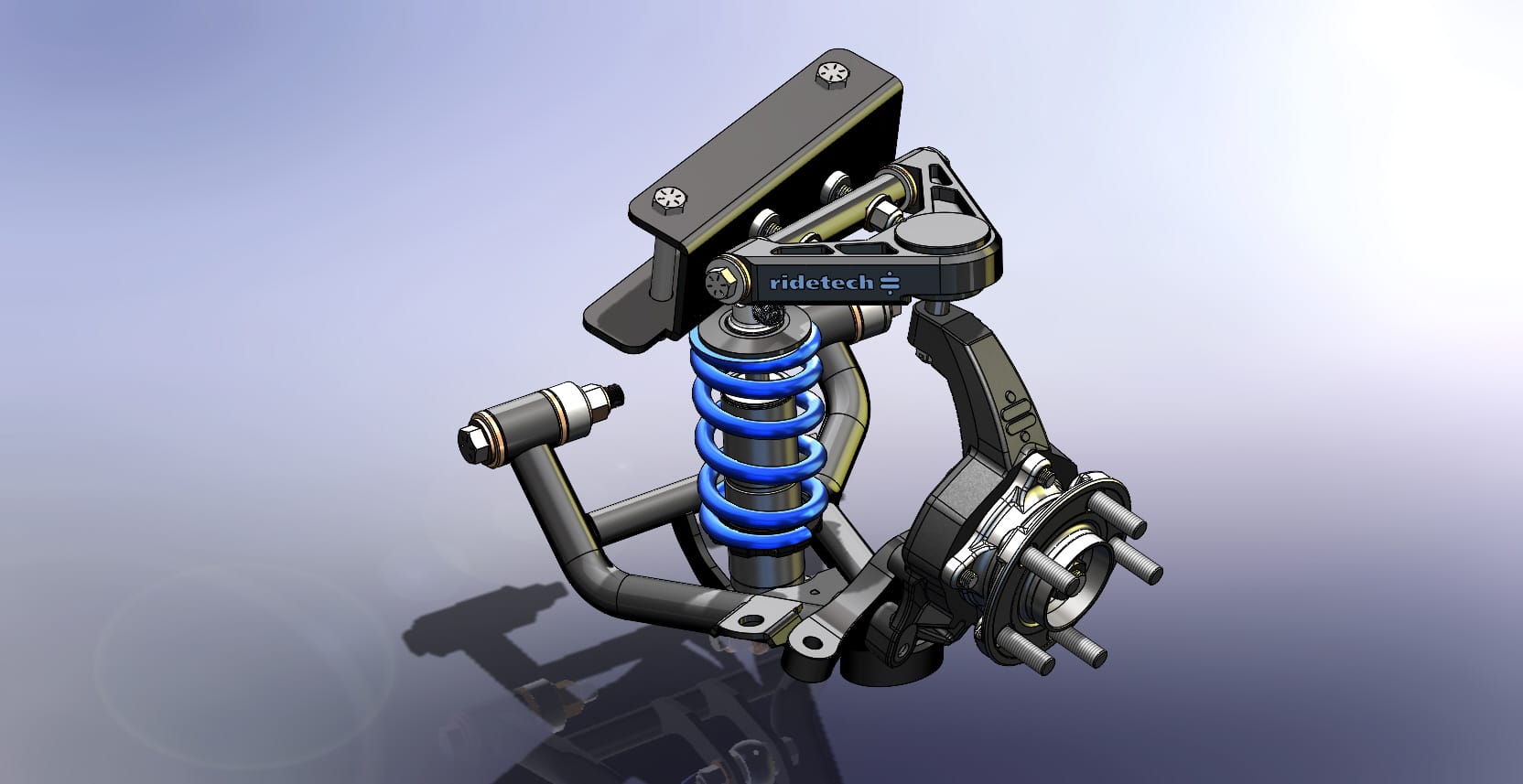
The Ridetech SLA
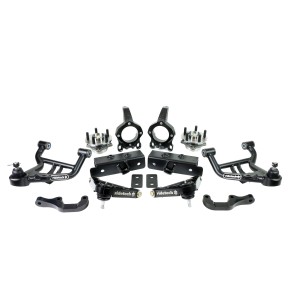
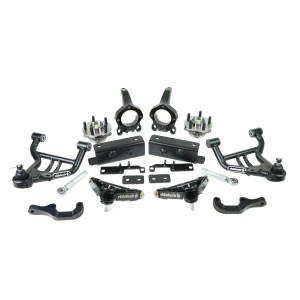
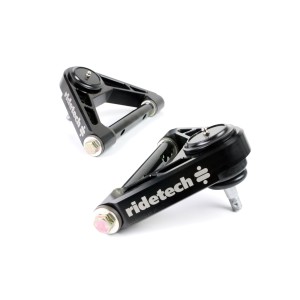
Taking a “clean sheet” approach to the front suspension, Ridetech’s designers strived to create the best front suspension design with minimal compromises. This included ditching the struts for an upper control arm arrangement to improved the camber curve. Caster angle, roll center, and Ackerman geometry were also optimized.
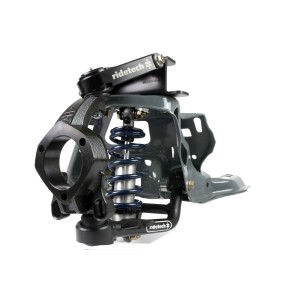
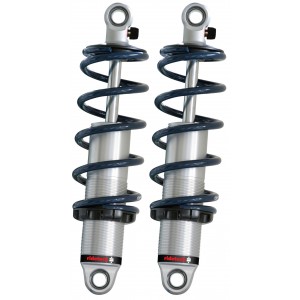
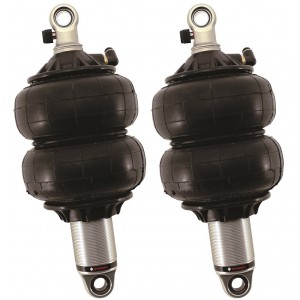
Furthermore, the innovative design houses either a coil-over damper or air spring setup low in the control arm and adds the upper shock mount to the frame rail. This increases tire clearance and sends the loads directly to the frame rails—not to the strut towers. As an added bonus, the design accommodates an air suspension without affecting tire clearance.
Speaking of tire clearance, the control arms are designed to clear a 275-width front tire at a drifting-friendly 30 degrees of steering angle.


Some aftermarket front suspension systems are hampered by the factory spindle (knuckle or upright as some also call it). By supplying their own spindle adding scary-long bump steer stacks, ball joint adapters, and other appendages to the factory spindles is cast aside. The Ridetech spindles use readily available 2015-2023 Mustang rear hubs for enhanced reliability when compared to the outdated Fox Mustang front wheel bearings.
While the Ridetech made wholesale geometry changes with their SLA front suspension, they realized many Mustangs may already have aftermarket crossmembers and later-model braking systems. With that in mind, Ridetech designed their suspension with options to accommodate a factory or aftermarket crossmember and caliper adapters for SN95 (1994-2004) or S550 (2015-2023) braking systems. Even most stock and aftermarket sway bars bolt right up. This keeps the overall cost for their SLA conversion to a minimum.

The Ridetech front SLA ticks all the boxes by not compromising on geometry while accommodating typical factory and aftermarket fitment situations.
Ridetech SLA by the Numbers:
- Negative Camber Gain: 1.25 degree per inch
- Positive Caster: 7-9 degrees
- Bump steer: under 0.050″ (Optimized for Maximum Motorsport and Team Z k-members)
- Works best at 2” lower than stock ride height
- 50lbs lighter than stock suspension
- Stock track width
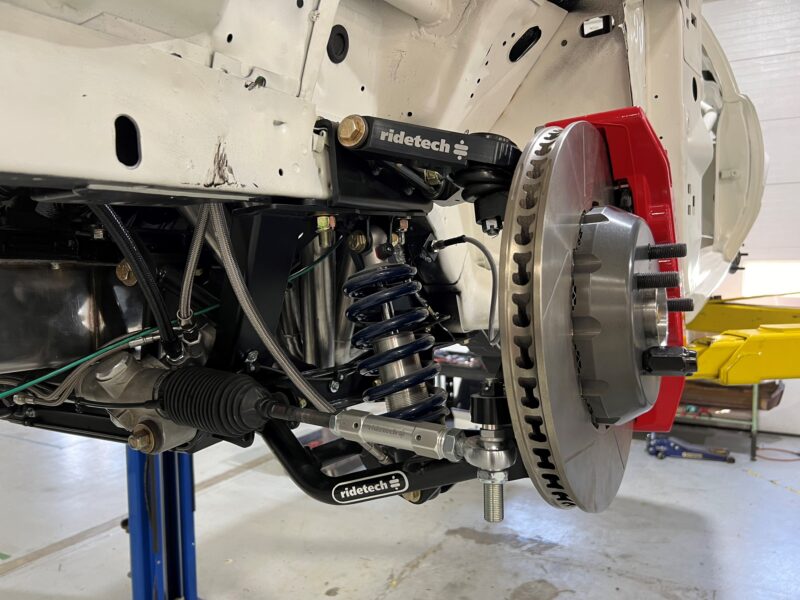
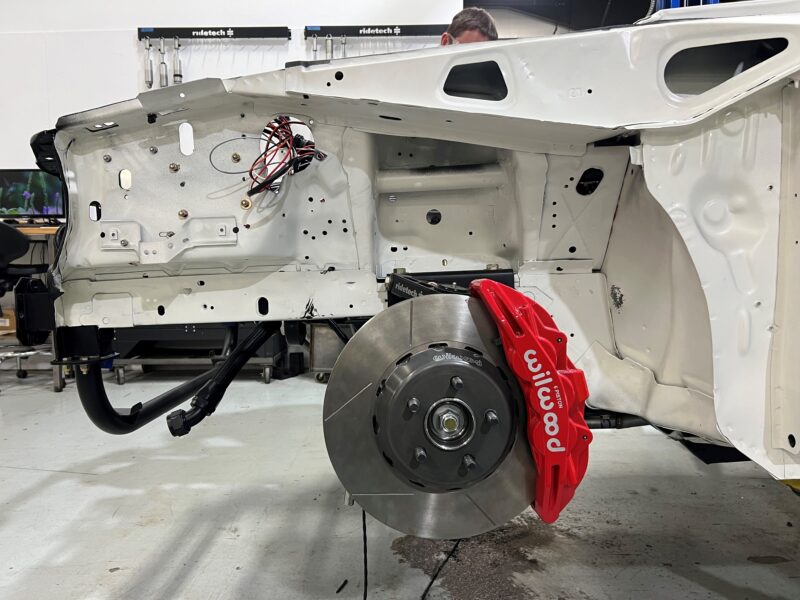
Image Caption: Above you can see Ridetech’s SLA suspension installed on their Ridetech Fox Body Race Car. Note how tight the packaging of the SLA system is compared to the traditional strut based tech. Less weight, less overall size, with much greater performance.